Energy Consumption – Absolute Value Graph by Life Cycle Stages
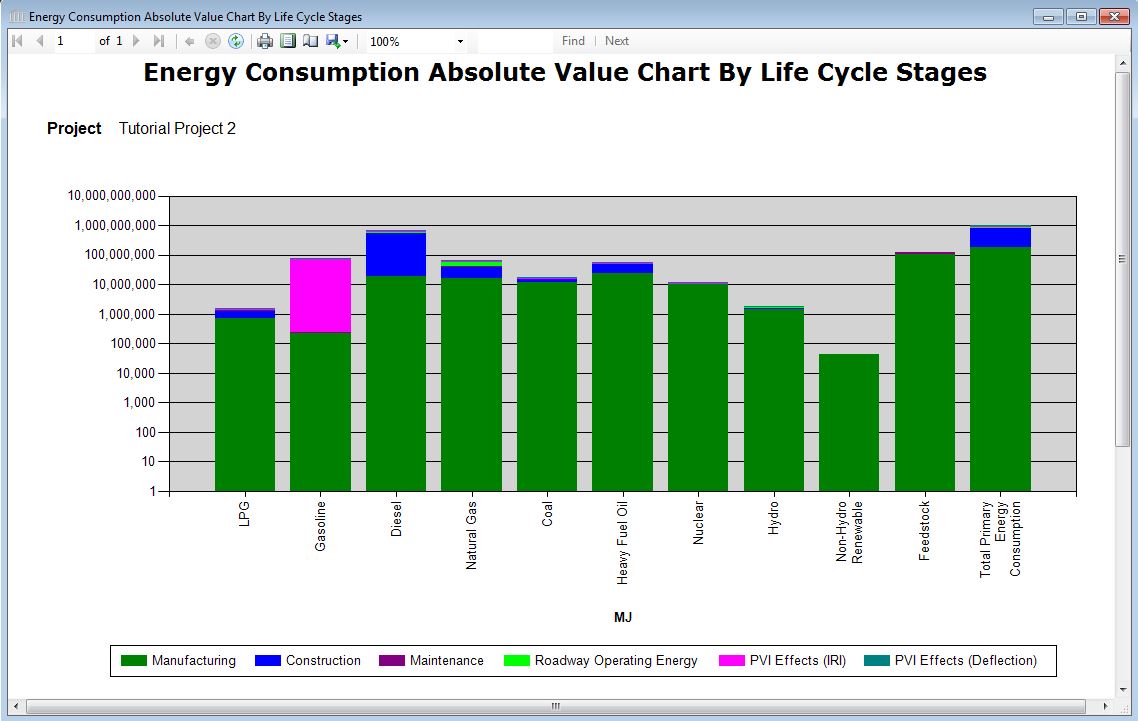
This graph displays absolute primary energy consumption by fuel type for each life cycle stage inclusive of structural and envelope effects as well as annual operating energy. The graph also displays the absolute primary energy consumption total for the project by life cycle stage.
Life Cycle Stage Definitions:
Manufacturing:- Includes resource extraction, resource transportation and manufacturing of specific materials, products or roadway components;
Construction:- Includes product/component transportation from the point of manufacture to the construction site and on-site construction activities;
Maintenance:- Includes life cycle maintenance and replacement activities associated with the structure and envelope components based on roadway type, location and a user defined life for the roadway project
Embodied Totals:- Includes life cycle effects due to Manufacturing, Construction adn Maintenance life cycle stages.
Use Phase: Roadway Operating Energy:- Includes life cycle operating energy
Use Phase: Excess Fuel Consumption tue to PVI:- Includes the projected excess fuel consumption due to Pavement Vehicle Interaction.
Roadway "End-of-Life":- Simulates demolition energy and final disposition of the materials incorporated in a roadway at the end of the roadway life. Since roadways are assumed to never really have an end of life scenario, no effects are calculated for demolition.
Fuels:
- Coal:
- Coal
Diesel:- Diesel Fuel
Electricity:- Net electricity use exclusive of how the electricity was generated. Reported as kwh. Actual primary fuel use for electricity generation is included in other fuel type totals.
Feedstock Fuels:- Includes all economically fuels used as raw material in the production of products (e.g., crude oil, natural gas, metallurgical coal, etc.).
Heavy Fuel Oil:- All Fuel Oils
Hydro:- Hydraulic energy used in the production of electricity - is not included in primary fuel total.
LPG:- Liquid Propane Gas
Natural Gas:- Natural Gas
Wood:- Wood residues and by-products used to generate energy.
All Table and Graph reports use a "Report Viewer", that has a common toolbar. Each member of the common toolbar is detailed in the "Report Toolbar" page.